

Every Ball Matters
The definitive resource for pickleball players — equipment, knowledge, brand comparisons, and the information you need to make a better decision on and off the court.
Not all pickleballs play the same. The right ball depends on where you play, how you play, and what you're optimizing for. This guide covers everything you need to make an informed decision.
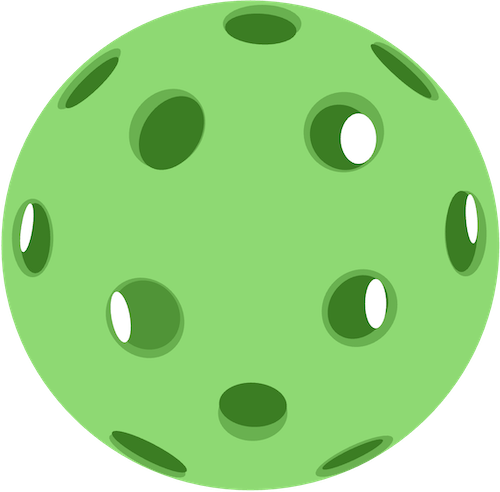
Indoor vs. outdoor: the most important decision
Every other choice — brand, price, tournament-grade or recreational — comes after this one. Play the wrong surface with the wrong ball and it wears faster and plays differently than it should.
Outdoor
Built for asphalt, concrete, and wind. Harder, more rigid plastic holds up over long sessions but hits back harder on the arm.
- Holes40, smaller
- PlasticHard, rigid
- FlightWind-stable
- Best forHard courts, competition
- LeadersFranklin X-40, Selkirk Pro S1
Indoor
Tuned for smooth gymnasium floors. Larger holes and softer plastic give a livelier bounce — but wear fast if used outside.
- Holes26, larger
- PlasticSofter, flexible
- FlightHigher bounce
- Best forGym floors, recreational
- LeadersFranklin X-26, Onix Fuse
Tournament vs. recreational play
Tournament balls are manufactured to tighter tolerances — consistent weight, roundness, and bounce from ball to ball. USA Pickleball maintains an approved list; the Franklin X-40, Selkirk Pro S1, Joola Ben Johns Hyperion, and Dura Fast 40 currently sit on it, among others.
Recreational balls trade some of that consistency for durability and value. For casual play, drills, or introducing new players, they're perfectly appropriate and noticeably cheaper per ball — Onix, HEAD, and Franklin all make solid options.
Hard vs. soft construction
Harder balls play faster and truer, rewarding precise shot-making — the tradeoff is that they crack more readily in cold weather and on abrasive surfaces. Softer balls play slower with more feel, forgiving beginners and anyone managing arm or elbow sensitivity. Most indoor balls fall into this category by design.
Leading brands, at a glance
Franklin Sports
The most widely distributed brand in the sport. The X-40 is the official ball of the US Open, and the X-26 is the indoor standard.
Selkirk Sport
A premium performance brand with a strong competitive following. The Pro S1 is their flagship outdoor tournament ball.
Joola
Table-tennis heritage brand. The Ben Johns Hyperion, co-developed with the world's top-ranked player, is a legitimate tournament option.
CRBN
A carbon-fiber specialist building a fast-growing reputation. Their ball lineup is newer but gaining traction among performance players.
Onix
One of the original premium brands, best known for the Fuse indoor ball and the Pure 2 outdoor ball. Broad club and retail distribution.
Dura
The Fast 40 has been a tournament staple for years and remains USA Pickleball–approved — known for a harder feel and fast play.
What determines how long a ball lasts
-
Seam
Seamless one-piece balls, like the Franklin X-40, are significantly more durable than two-piece constructions — the seam is always the failure point under repeated impact.
-
Wall thickness
Thicker walls resist cracking longer. Premium tournament balls invest in tighter wall-thickness tolerances across production runs.
-
Temperature
Most pickleball plastics get brittle in cold conditions. The Dura Fast 40 in particular is known to crack faster in cold weather.
-
Surface
Abrasive outdoor surfaces wear balls faster. Expect 3–5 sessions from a recreational outdoor ball, and 5–10 from a premium tournament ball.
Eco-friendly options
Standard pickleball plastic takes centuries to break down — a real problem as the sport scales to tens of millions of players. A small but growing category is tackling it: Komodo's BIOBALL claims ASTM D5511 biodegradation certification, Compost-a-Ball's CB PRO claims 100-day decomposition, and Eco Sports uses recyclable TPE instead of standard polypropylene.
Independent verification of these claims is still limited — look for documented third-party certification rather than relying on marketing alone.
Two balls to know before you buy anything else
Franklin X-40 — the most widely used tournament ball in the sport. Regardless of where you play or who you play with, it's a consistent, well-understood standard.
Franklin X-26 or Onix Fuse — the two most commonly encountered club balls, and useful reference points for what a quality indoor ball should feel and play like.